
Conventional wisdom holds that a “perfect marriage” is a myth—at least if your definition of perfection is a relationship devoid of conflict, ego, or impatience. If perfection is defined as a static peak where no further growth is possible, then the skeptics are right. Such a state would be both impossible and stagnant.
However, I want to challenge that traditional definition. We must remember that perfection does not exist as a final product. Instead, it lives within the journey itself. The process becomes perfect through how we love, how we respond, how we humble ourselves, and how we nurture our relationships. I want to suggest that perfection is found in the process—deeply rooted in how we choose to grow.
The Messy Reality
For a long time, I believed my marriage could never be perfect. We are just two imperfect people trying to navigate a messy life together. In our early years, my wife and I had some epic battles. There was yelling, door-slamming, and even a flying frying pan—which, in hindsight, I probably deserved.
We are both stubborn and desperate to be right. Yet, after seventeen years, I’ve reached a new conclusion: if perfection is found in the process, then I believe I have a perfect marriage. No matter how intense the friction, there was always a shared heartbeat between us that refused to quit. No matter the argument, we always returned to one another in love.
The Foundation: Perfection Through Grace
We must acknowledge that we are not perfect, and on this side of eternity, we never will be. However, we are constantly being perfected through the love and grace of Jesus Christ. We are called to be holy because He is holy, but holiness isn’t a trophy we win—it is a nature brought out of us through refinement.
In marriage, this perfection manifests when we choose to kill our ego and embrace the call to selflessly serve. We won’t do it flawlessly, but perfection isn’t found in the final product; it is found in the daily, intentional choices we make to be more like Him.
The Three Pillars of a “Perfect” Process
A marriage achieves a form of “functional perfection” when it moves away from the view of a “finished product” and toward a “way of life” built on three active traits:
Humility: The willingness to be wrong and the openness to learn from your partner.
Ownership: Taking full credit for your contributions to both the successes and the failures of the union.
Responsibility: The proactive commitment to nurture the relationship every day, regardless of the current “weather.”
As Jimmy Carr once noted, “We all have to serve somebody; why not let it be the person we love?” When we choose our spouse over our ego, we are seeing love in its most active, perfect form.
The Beautiful Mend
Here is the clincher: none of this is possible without a foundation built on Jesus Christ. I don’t say this to sound preachy or overly spiritual; I am simply sharing the truth of what has proven itself true in my own life time and time again.
Jesus cares deeply about our hearts. He wants us to become more like Him, which means learning to love selflessly. When we commit to growing and loving our spouse the way Jesus loves us, perfection is no longer a human achievement. Instead, it is found in the very process of becoming more like Him.
Perfection isn’t about never falling; it’s about the grace and accountability with which you both choose to get back up. A perfect marriage isn’t one that never breaks—it’s one that is constantly and beautifully being mended.
There is an old saying: “The more you do it, the better you get.” Don’t expect to reach a state where you no longer have to try. Instead, focus on perfecting the way you love, respond, and humble yourself. That is where the beauty lives.
Join the Conversation
Is “perfection” a word we should be using in marriage, or does it create too much pressure? How would your relationship change if you viewed perfection as a process rather than a destination? Leave a comment below—I’d love to hear your perspective.

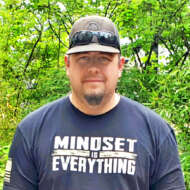
Dr. Kristopher Wallaert is an educator in Mountain Home, Idaho. He enjoys being outdoors – hiking, camping, and hunting. He also finds peace in taking care of their property. He and his wife have been happily married for over 14 years. Together they have four phenomenal children – three girls and one boy. He holds a doctorate in education with an emphasis in leadership and administration. Kristopher has a yearning to be a man of God for his family, and to be a good example for his children. You can find more about Kristopher in Selfless-Leadership.
Image by CoPilot
0 Comments